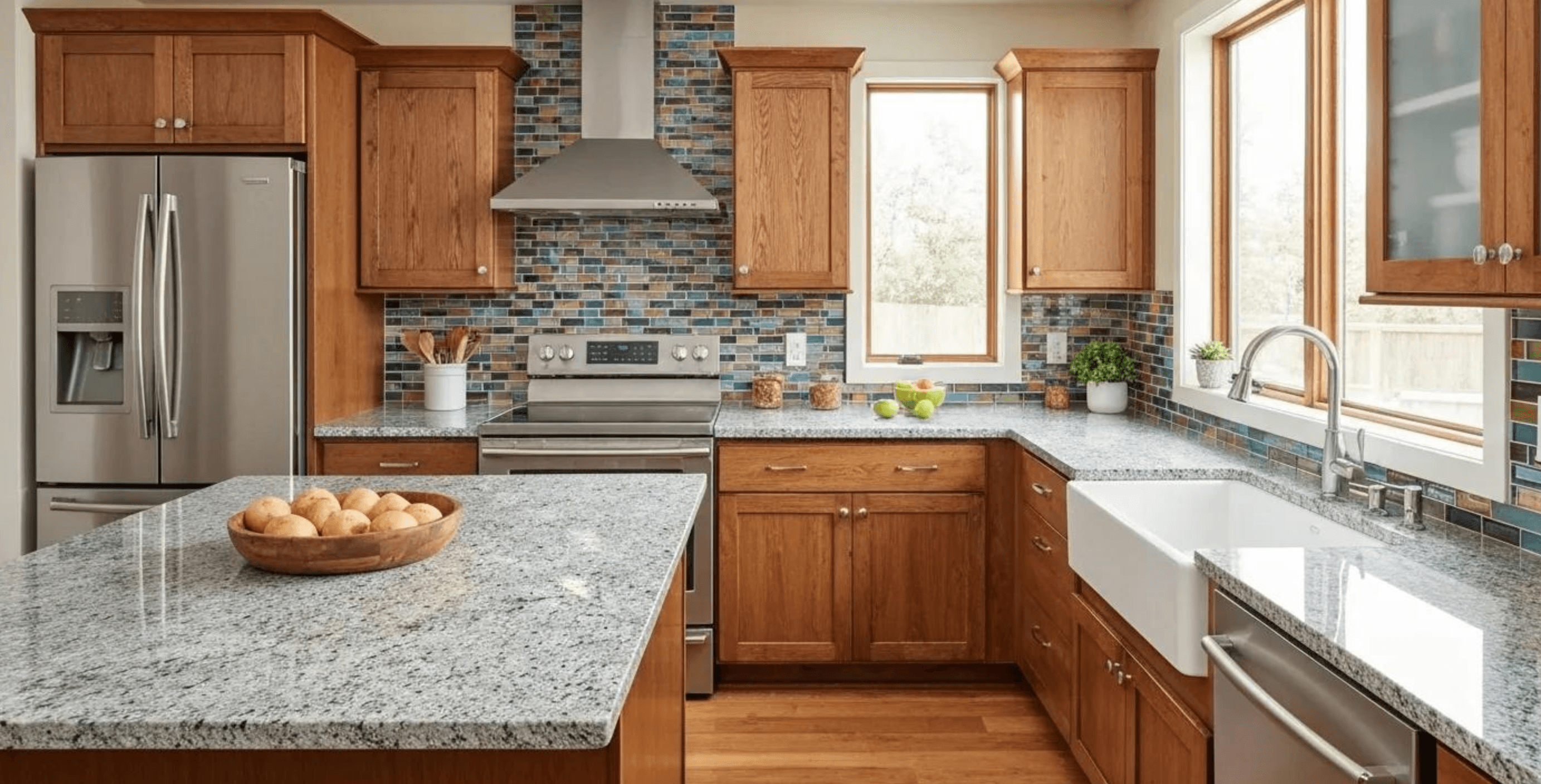
What actually shapes the cost and schedule of a Houston kitchen remodel — from cabinetry and countertops to permitting and contingency — plus how an owner-led team keeps the process clear from first walkthrough to final reveal.
Few questions come up earlier in a kitchen project than "what will it cost, and how long will it take?" Both answers depend almost entirely on scope, materials, and the condition of what's behind your existing walls — so any honest guide deals in ranges, not promises. The figures and durations below are general planning references that vary from home to home; they are not quotes or guarantees. What they can do is help you frame a realistic budget and schedule before you ever sit down to design. For the full scope of work we handle, see our kitchen remodeling in Houston service.
What Drives the Cost of a Houston Kitchen Remodel
Two kitchens of identical square footage can land at very different price points, and the gap almost always traces back to a handful of decisions. Understanding these drivers up front lets you steer the budget toward what matters most to your household rather than discovering trade-offs halfway through demolition.
- Cabinetry: Often the single largest line item. Stock cabinets cost the least, semi-custom adds flexibility in sizing and finish, and fully custom millwork sits at the top. The choice between refacing existing boxes and replacing them entirely moves the number significantly.
- Countertops: Material, edge profile, and slab quality all matter. Quartz, granite, porcelain, and natural stone each carry different price and maintenance profiles — we compare them in detail in the related guides below.
- Layout changes: Leaving plumbing and walls where they are keeps costs predictable. Relocating a sink, moving gas lines, or opening a wall introduces structural, plumbing, and electrical work that raises both budget and timeline.
- Appliances and fixtures: Finish level here is a wide spectrum, from solid mid-range packages to professional-grade suites.
- Hidden conditions: Older Houston homes can reveal dated wiring, plumbing, or moisture issues once walls open. This is the part of a budget you cannot see in advance — which is exactly why contingency exists.
Industry guides commonly cite a broad national range running from cosmetic refreshes in the low five figures up through full custom renovations well beyond that — but those are national, illustrative figures, not Houston quotes. Your real number comes only from a scoped, in-home estimate. If your project reaches beyond the kitchen into adjoining spaces, our home remodeling and whole-home renovations pages outline how larger scopes are coordinated.
A General Timeline, Phase by Phase
As a general guide — not a guarantee — many Houston kitchen remodels run roughly 6 to 12 weeks of on-site work once the design is finalized and permits are in hand. Structural changes, custom-order lead times, and permitting can push the longer end of that range. Design and material selection happen before this clock starts, and pre-ordering long-lead items early is one of the most reliable ways to protect the schedule.
Design and Planning
Before any tool comes out, we map the layout, confirm selections, and prepare anything that requires a permit. The more decisions that are locked in here, the fewer mid-project pauses later. This phase rewards patience: changing a cabinet finish on paper costs nothing, while changing it after fabrication costs both time and money.
Demolition and Rough-Ins
Old cabinets, counters, and finishes come out, and any plumbing, electrical, or HVAC adjustments for the new layout get roughed in. This is when hidden conditions surface, and where a clear contingency plan earns its place. City inspections typically gate the transition out of this phase.
Installation and Finishing
Cabinetry is set, countertops are templated and installed, flooring goes down, and appliances are connected. Finishing work — paint, trim, lighting, hardware, and a final detailed walkthrough — closes out the project. Countertop templating often introduces a short, unavoidable wait between cabinet setting and slab installation, which good scheduling anticipates rather than fights.
Permitting in Houston can run on its own track alongside material ordering. When structural, plumbing, or electrical work is involved, plans must be reviewed and approved before that work proceeds, which is why we file early and coordinate it with design finalization rather than treating it as an afterthought.
Budgeting and the Case for a Contingency
A budget that only covers the visible scope is a budget waiting to be broken. The single most useful habit for a remodel is to plan for what you cannot yet see. A handful of disciplined steps keeps surprises from becoming setbacks:
- Set a contingency reserve. A common rule of thumb is to hold back 10-15% of the project budget for unforeseen conditions like concealed water damage or outdated wiring. Treat it as expected, not optional.
- Get a scoped, written estimate. A line-item estimate tied to specific selections is far more useful than a single lump-sum figure, because it shows you exactly where your money is going and where adjustments are possible.
- Prioritize high-impact choices first. Cabinetry, counters, and layout shape both cost and daily use more than almost anything else. Decide those before luxury add-ons.
- Lock selections before demolition. Late changes are the most expensive kind. Finalizing finishes early protects both budget and schedule.
- Pre-order long-lead items. Custom cabinetry and specialty materials often carry the longest waits — ordering them at the right moment keeps the on-site phases from stalling.
On return: well-executed kitchen updates are frequently cited among the stronger home-improvement investments in national remodeling reports, but recovery rates vary widely by market, scope, and finish level — and national figures should never be read as a guaranteed local return. Build for how you'll live in the space first; resale benefit follows quality work rather than the other way around.
Working With an Owner-Led Team
Cost and timeline ranges only become real once a specific team is standing in your specific kitchen. IAS Boutique Remodeling is an owner-led residential remodeler serving Greater Houston since 2019, and we are fully insured with general liability and workers' compensation coverage. Direct owner involvement means projects are not handed down an assembly line — the person accountable for your remodel is involved from the first walkthrough through the final detail.
In practice, that translates to one clear point of contact, a scoped estimate you can actually read, and steady communication through demolition, inspections, and installation. We coordinate the trades, anticipate the lead times, and keep you informed when a hidden condition surfaces rather than after it's been buried again. For projects across the area — including Sugar Land and kitchen remodeling in The Woodlands — that local familiarity with home styles and permitting keeps the process moving. You can see completed work on our projects page, and when you're ready to talk specifics, our general contractor and contact pages are the place to start.
A kitchen remodel is a meaningful investment of money, time, and patience. Going in with realistic ranges, an honest contingency, and a team that communicates plainly is what turns that investment into a space you'll actually enjoy living in — without the surprises that derail less-prepared projects.